Intel Says 18A May Reach Strong Margins by 2027; Notebook Chips on the Node Mark Fastest Ramp in 5 Years
  Intel is betting heavily on 18A to support the company’s turnaround plan. According to The Register, Chief Financial Officer David Zinsner said that early last year Intel faced the challenge of trying to improve both performance and yield at the same time. The company later shifted its focus to stabilizing performance first, and with that objective largely achieved, it is now concentrating on improving yield month by month.  Zinsner said Intel’s goal is to achieve yield levels that support strong margins, adding that the company is currently ahead of schedule to reach that target by the end of 2027, as the report highlights. He added that after Lip-Bu Tan joined the company, Intel began sharing more manufacturing data with its vendors. The increased collaboration helped improve yields and made a dramatic difference.  Looking beyond 18A, Zinsner also expressed confidence in Intel’s 14A. According to the report, he said the company has adopted a more aggressive approach than it did with 18A, adding that yield and performance metrics are currently ahead of where 18A was at the same stage of development.  Intel 3 and 18A Supply Set to Rise Amid Strong CPU Demand  In addition to providing an update on Intel’s manufacturing roadmap, Zinsner highlighted growing supply from Intel 3 and 18A, according to Seeking Alpha. As cited by the report, he said Intel expects a meaningful increase in supply from both Intel 3 and 18A over the coming quarters to meet rising demand. He added that 18A-based notebook processors are ramping quickly and represent the company’s fastest-ramping product launch in at least the past five years.  The company is also seeing rising CPU demand. According to The Register, Zinsner said it remains difficult to predict the full extent of future growth, but he expects the market to be substantial. He said the key challenge at present is supply, adding that Intel sees sufficient demand in the market and should be able to grow data center revenue meaningfully if it executes successfully on planned supply ramps.
Key word:
Release time:2026-06-05 10:40 reading:204 Continue reading>>
Samsung Starts Shipping Industry-First HBM4E Samples 3 Months After HBM4 Ramp; Performance Up 20%+
  Just months after rolling out HBM4 shipments in early 2026, Samsung has begun providing samples of the industry’s first 12-layer HBM4E to major global partners, according to the company’s latest press release.  Given that HBM4 shares the same 1c DRAM process and 4nm base die architecture as HBM4E, and is already in mass production, industry observers suggest the newly shipped HBM4E samples are also well positioned to transition into mass production. Samsung adds that it plans to proceed with HBM4E mass production in line with client-specific timelines.  Meanwhile, Samsung is also expanding mass production and supply of HBM4, which became the world’s first HBM4 to enter mass production and shipment in February. In December last year, Samsung’s HBM4 received top-tier evaluation after demonstrating an industry-leading 11.7Gbps speed in System-in-Package (SiP) testing, the final certification stage, the company adds.  According to News1, the latest development makes Samsung the first to supply HBM4E. Industry observers cited by the report also noted that starting from HBM4, customer-specific design flexibility and stable large-scale supply capabilities will become even more critical. Against this backdrop, Samsung’s integrated strengths across memory, foundry, and advanced packaging are expected to stand out even more clearly, the report adds.  HBM4E Upgrade with 20% Performance Boost, 30% Higher Capacity  In terms of performance, Samsung notes that HBM4E marks a notable upgrade over the previous generation, offering a stable 14Gbps pin speed that can scale up to 16Gbps for more demanding AI workloads. Compared with HBM4, the new memory delivers over 20% higher performance and reaches bandwidth of up to 3.6TB/s per stack, significantly improving compute efficiency for large language models (LLMs) and next-generation AI systems.  Additionally, Samsung’s 12-layer HBM4E is currently offered in a 48GB capacity, which is more than 30% higher than the previous generation. The company plans to expand the lineup to include 32GB (8-layer) and 64GB (16-layer) variants to better align with diverse customer requirements as well.  From an efficiency standpoint, Samsung highlights that advanced low-power design techniques and an optimized packaging architecture have improved energy efficiency by 16% while reducing thermal resistance by more than 14% compared with the previous generation.  HBM4E Progress Among Rivals  Meanwhile, progress from SK hynix and Micron in HBM4E has come under closer market scrutiny following Samsung’s advances. According to Yonhap News Agency, SK hynix had initially planned to begin HBM4E sample shipments in the second half of this year, but recent reports indicate smoother-than-expected development progress, bringing forward its timeline.  On the other hand, Micron said its first HBM4E product will follow JEDEC standards, with mass production ramp-up targeted for 2027, according to STOCK Analysis.
Key word:
Release time:2026-05-29 10:18 reading:438 Continue reading>>
Micron More Upbeat on Outlook, Reportedly Sets 2027 HBM4E Ramp with TSMC for Standard, Custom Logic Dies
  Two months after its March earnings call, Micron is turning more upbeat on its outlook, while providing additional details on its custom HBM development progress. At the J.P. Morgan 54th Annual Global Technology, Media and Communications Conference, Micron’s Global Operations EVP Manish Bhatia, via STOCK Analysis transcript, said the company’s first HBM4E will be a JEDEC-standard product, with ramp-up scheduled for 2027.  While Micron is still using 1-beta DRAM for HBM4, Bhatia said the company is expected to transition to 1-gamma DRAM in the HBM4E era. He also confirmed that the logic dies for both standard and custom HBM4E are expected to be manufactured by TSMC.  When asked about the margin profile of customized products, Bhatia, according to STOCK Analysis, highlighted that value creation stems from multiple proprietary layers: design innovation, robust core DRAM development, and advanced packaging.  He emphasized that customization represents the next evolution of this value expansion, and as the value increases, customers are expected to be willing to pay for the added customization.  Improving Outlook vs. Previous Earnings Call  According to Bhatia, Micron now expects tight conditions across HBM, DRAM, and NAND to persist well beyond 2026. Thus, he noted that the financial outlook has strengthened since the company’s last earnings call, and it is on track for another substantial record free cash flow in fiscal Q3.  Notably, Bhatia pointed out that while pricing has largely played out as expected, demand remains very strong. He added that the AI ecosystem is shifting from human interactions to agentic and even machine-to-machine workflows, with these agentic workloads increasingly driving inference demand. As inference takes up a larger share of workloads, memory is increasingly seen as a strategic asset for customers, he said.  Against this backdrop, Micron said in March that it had secured its first strategic customer agreement—a five-year deal with a large customer. Since then, the company has made meaningful progress on additional SCAs, with other customers also showing strong interest in establishing similar strategic relationships with Micron, including in NAND, Bhatia said.  India Capacity Reported Booked up  Amid tight demand, Bhatia also said Micron’s global expansion is accelerating. He noted that its Idaho 1 site is progressing well, with the company pulling forward its wafer output timeline from the second half of 2027 to mid-2027.  Surging memory demand is also driving ramp-up at Micron’s new semiconductor assembly and test facility in Sanand, Gujarat, which began operations in late February. In a separate report by Business Standard, Micron’s entire memory production capacity in India has been fully booked amid strong demand.  According to a previous Business Standard report, at full capacity, the facility could account for up to 10% of Micron’s global output, supplying both domestic and international markets.  Sumit Sadana, executive vice-president and chief business officer at Micron, reportedly told Indian media outlet The Economic Times that the global semiconductor memory shortage triggered by the AI boom is proving far more severe than many companies currently anticipate, with the crunch potentially extending well beyond 2028 despite aggressive capacity expansion across the industry.
Key word:
Release time:2026-05-25 10:44 reading:462 Continue reading>>
ROHM has added New Lineup of 17 High-Performance Op Amps Enhancing Design Flexibility
  ROHM has added the new CMOS Operational Amplifier (op amp) series “TLRx728” and “BD728x” to its lineup. These are suitable for a wide range of applications including automotive, industrial, and consumer systems. A broad lineup also makes product selection easier.  In recent years, demand for high-accuracy op amps has been rapidly increasing as automotive and industrial systems become more sophisticated, demanding faster speed, better precision, and higher efficiency. In applications requiring amplification of sensor outputs, minimizing signal error and delay is essential. To meet these requirements, a well-balanced set of key characteristics is needed, including Input Offset Voltage, Noise, and Slew Rate.  These new products are high-performance op amps that offer a low input offset voltage, low noise, and high slew rate. TLRx728 features an input offset voltage of 150 μV (typ.), while the BD728x offers 1.6 mV (typ.). Both series have a noise voltage density of 12 nV/√Hz at 1kHz and a slew rate of 10 V/μs. They are therefore suitable for a wide range of precision applications, including sensor signal processing, current detection circuits, motor driver control, and power supply monitoring systems. Both series are designed to balance versatility and high performance rather than being limited to specific applications.  Rail-to-Rail input/output capability allows maximum utilization of the power supply voltage range, ensuring a wide dynamic range.  Furthermore, in addition to 1 channel, 2 channels, and 4 channels configurations, a diverse range of packages is available, enabling optimal product selection based on application and board size.  The new products are being released simultaneously except for certain part numbers (Sample Price: 1-channel: $2.0, 2-channels: $2.8, 4-channels: $4.0 per unit, excluding tax).  Application Examples  Automotive equipment, industrial equipment, and consumer electronics.  Example use case: Sensor signal processing, current detection circuits, motor driver control, power supply monitoring systems.  Terminology  Input Offset Voltage  The voltage that must be applied between the op amp’s two input terminals to force the output to zero volts.  Slew Rate  A performance metric indicating how rapidly an op amp's output voltage can change while operating in linear region.  Noise Voltage Density  Also called noise spectral density. This is noise power per square root of bandwidth of 1 Hz. The total noise power within a bandwidth of B Hz is Noise Voltage Density x √B.
Key word:
Release time:2026-04-03 10:56 reading:658 Continue reading>>
MQ771-GL: Fibocom’s Compact Cat.M Module Enters Sampling, Driving Asset Tracking Innovation
  Fibocom (300638.SZ | 0638.HK), a global leader in wireless communicationmodules and AI solutions, announced that its Cat.Mmodule MQ771-GL has entered the engineering sample stage. Withits ultra-compact size, low power consumption,global frequency coverage, and stable network compatibility,the MQ771-GL offers a cost-effective IoT solution for asset tracking, enablinglong battery life, high reliability, and precise positioning for large-scaleLPWA deployments.  Dual-Mode Support for FlexibleDeployment  The MQ771-GL supports 3GPP Release 14Cat.M1 and NB-IoT standards and is compatible with mainstream frequencybands worldwide, making it ideal for LPWA network deployments across NorthAmerica, Europe, Asia, and beyond. This global compatibility ensuresreliable connectivity for asset tracking devices and enables flexible operationeven in complex or challenging environments.  Compact Size with Ultra-Low Power Consumption  Leveraging advanced power managementtechnologies, the MQ771-GL supports PSM (Power Saving Mode) and eDRX (extendedDiscontinuous Reception), dramatically extending device battery life. InPSM mode, standby current drops to the microampere (μA) level, cutting powerconsumption by 75% compared with the previous generation — ideal for smartwater meters. In eDRX mode, power usage is reduced by 90%, making itsuitable for gas meters, asset trackers, and other long-term outdoor devices,enabling multi-year operation.  The module’s 17.7mm × 15.8mm LGA package is compatible with the pin layout of Fibocom’s Cat.1 modules, supportingflexible product iteration. Its compact form factor is well-suited forspace-constrained tracking devices, simplifying integration and deployment.  Enhanced Performance with Rich InterfaceOptions  The MQ771-GLsupports MQTT, CoAP, LwM2M and standard interfaces like UART, I2C,and I2S, making it adaptable for diverse asset tracking terminals. Itintegrates Soft GPS for precise real-time positioning and features a hardware-levelsecurity engine for encrypted, secure communications, protecting againstunauthorized access.  Liu Sunzhi,General Manager of Fibocom’s MTC Business Unit, commented:  "With the MQ771-GL now entering the engineering sample stage, itsultra-compact, ultra-low-power design is set to lower development barriers forasset tracking terminals and accelerate large-scale IoT connectivity. Movingforward, we will continue to strengthen collaborative innovation with verticalindustries, driving the rapid commercialization of low-power, wide-connectivitysolutions for asset tracking and other IoT applications."
Key word:
Release time:2026-02-06 17:41 reading:1025 Continue reading>>
A new choice for high-accuracy, highly compatible current sensing: NOVOSENSE launches the NSCSA21x-Q series high-precision current sense amplifiers
  NOVOSENSE has launched the NSCSA21x-Q series high-precision current sense amplifiers, offering a –2V to 28V common-mode input range, ultra-low ±5μV offset voltage, 130dB CMRR, and 200kHz bandwidth. Designed to meet the needs of new energy vehicles, server power supplies, telecom power systems, and energy storage, the NSCSA21x-Q series delivers exceptional accuracy and system stability in demanding environments.  Addressing Key Challenges in Modern Power and Automotive Systems  As automotive electrification and industrial intelligence advance, current sensing accuracy and system stability have become critical to overall performance. Traditional current sensors often face limitations in low-voltage detection, reverse connection protection, and dynamic response, impacting system reliability and efficiency. The NSCSA21x-Q series directly targets these pain points, overcoming three major challenges in precision current detection:  (1) High-Precision Motor Phase Current Sampling  Supports bidirectional current sensing in H-bridge structures. Combined with FOC algorithms, it enables ±0.5° electrical angle control for precise motor performance.  (2) Suppression of Parasitic Inductance Interference  In low-side sensing, the NSCSA21x-Q effectively mitigates “ground bounce” effects through PWM rejection, maintaining high accuracy even with small current signals. With a 130dB CMRR and only ±5μV input offset, it ensures signal integrity under severe transient conditions.  (3) Reverse Battery Protection  Withstands up to –28V reverse voltage, safeguarding the system against battery misconnection and simplifying protection circuit design.  Robust Performance Across All Operating Conditions  Breaking conventional design limits, the NSCSA21x-Q series supports a wide –2V to 28V common-mode range with built-in PWM suppression and chip-level reverse-voltage tolerance. Even under –28V reverse common-mode stress, the device quickly resumes normal operation. In rigorous transient tests (–2V to 12V step change), it achieves a <5μs recovery time and <50mV output disturbance, making it ideal for high-accuracy current detection in motor drives and solenoid control under PWM switching environments.  Precision and Stability Across Temperature Extremes  Featuring a ±5μV (typical) input offset voltage and ±0.5% maximum gain error, the NSCSA21x-Q maintains outstanding accuracy over a full –40°C to 125°C temperature range. With a temperature drift as low as 0.05μV/°C, it ensures stable measurements in harsh automotive and industrial conditions.Input Offset Voltage Distribution of NSCSA21x-Q SeriesCommon-Mode Rejection Ratio (CMRR) Distribution of NSCSA21x-Q Series  Fast Dynamic Response and Strong Transient Protection  With a 200kHz bandwidth (50V/V gain) and a 2V/μs slew rate, the NSCSA21x-Q supports fast current variation monitoring and real-time protection. Compared to mainstream alternatives, it achieves up to 3× faster transient response, meeting the needs of high-speed applications such as motor control and power protection.  Flexible Configurations with Automotive-Grade Reliability  The NSCSA21x-Q series offers four fixed gain options (50V/V, 75V/V, 100V/V, and 200V/V), covering both industrial and automotive versions. Packaged in an ultra-compact SC70-6 (2mm × 1.25mm) footprint, it's pin-compatible with industry standards, enabling smaller system size and higher design efficiency.Four Fixed-Gain Versions of the NSCSA21x-Q Series  The NSCSA21x-Q series is AEC-Q100 Grade 1 qualified, supporting –40°C to +125°C operation and ensuring long-term reliability in automotive environments.
Key word:
Release time:2026-01-15 17:20 reading:2292 Continue reading>>
NOVOSENSE launches automotive- and industrial-grade NSCSA240-Q series current sense amplifiers to address PWM transient interference challenges
  NOVOSENSE announced the launch of its new bidirectional current sense amplifier series, NSCSA240-Q, covering both industrial and automotive versions, designed for high-voltage PWM systems in vehicles and industrial equipments. The NSCSA240-Q series integrates enhanced PWM rejection technology, supporting bidirectional current sensing with exceptional transient immunity, automotive-grade precision, and flexible configurability. Featuring an ultra-wide input common-mode range from –4V to 80V, a typical input offset voltage of ±5μV, and a 135dB DC Common-Mode Rejection Ratio (CMRR). This series effectively tackles the challenge of high-frequency transient interference in PWM systems, providing a highly reliable current monitoring solution for automotive electronic power steering (EPS), motor drive, industrial automation and other applications. The NSCSA240-Q series meets the AEC-Q100 automotive reliability standard.  Superior Transient Immunity: Reliable Performance in High-Voltage PWM Environments  In PWM systems, rapid switching can cause severe common-mode voltage fluctuations that distort output signals in conventional amplifiers. The NSCSA240-Q series achieves an AC CMRR of 90dB at 50kHz, effectively suppressing ΔV/Δt transients. Its proprietary transient suppression design reduces output disturbances by up to 80%, achieving a recovery time of less than 10μs under 80V common-mode voltage transients. With a bandwidth ranging from 450kHz to 600kHz (gain-dependent), it supports both high-speed overcurrent protection and accurate low-frequency PWM signal capture—ensuring stable, low-noise signal performance for EPS, motor drive and industrial motor control systems. The wide –4V to 80V input common-mode range offers broad dynamic capability and robust tolerance across 12V, 24V, and 48V vehicle power architectures. Furthermore, ±2000V ESD protection (HBM/CDM) enhances resistance to external electrical disturbances, ensuring overall system reliability.NSCSA240-Q Series Application Diagram  Automotive-Grade Precision: ±5μV Offset and ±0.1% Accuracy Across –40°C to 125°C  Designed to meet the increasingly stringent current measurement requirements of automotive electronics, the NSCSA240-Q series delivers exceptional measurement stability. It features a typical input offset voltage of only ±5μV (maximum ±25μV) and achieves ±0.1% accuracy over a wide temperature range (–40°C to 125°C). With a typical gain error of 0.05%, it ensures reliable and consistent current monitoring even under harsh conditions. Fully qualified to the AEC-Q100 automotive standard, the series guarantees long-term reliability in demanding in-vehicle environments.  Flexible Integration: Multiple Gain and Package Options for Design Optimization  As automotive systems trend toward miniaturization and integration, the NSCSA240-Q series is engineered for flexible and space-efficient design. It offers four fixed gain options—20V/V, 50V/V, 100V/V, and 200V/V—supporting shunt resistors ranging from 10mΩ to 0.1mΩ for flexible current detection. The series is available in two compact packages: SOIC-8 (4.9mm × 3.91mm) and TSSOP-8 (3mm × 4.4mm), allowing easy integration into space-constrained motor controller PCBs and helping designers optimize system layouts within limited board area.NSCSA240-Q Series Package
Key word:
Release time:2026-01-12 13:52 reading:1766 Continue reading>>
ROHM has Developed Ultra-Compact CMOS Op Amp: Delivering Industry-Leading* Ultra-Low Circuit Current
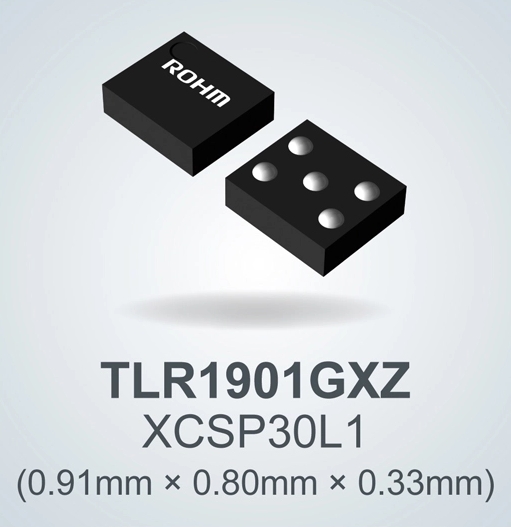
  ROHM’s ultra-compact CMOS Operational Amplifier (op amp) TLR1901GXZ achieves the industry’s lowest operating circuit current. This IC is optimized to be applied as a measurement sensing amplifier in size-constrained applications such as handheld measurement instruments, wearable devices, and indoor motion detectors.  As the demand continues to grow for more sophisticated control in battery-driven devices, the importance of sensors that detect parameters such as temperature, humidity, vibration, pressure, and flow rate – along with the op amps used to amplify these sensor signals – continues to rise. At the same time, greater miniaturization and energy savings in applications is a necessary step to realizing a sustainable society –placing similar demands on individual devices as well.  In response to these evolving market needs, ROHM has advanced its process, packaging, and proprietary Nano Energy™ circuit technologies to develop an op amp that addresses three key requirements: lower power consumption, higher accuracy, and compact size. The newly developed TLR1901GXZ achieves an ultra-compact footprint of less than 1mm2 by adopting a WLCSP (Wafer Level Chip Scale Package) with a fine ball pitch of 0.35mm while delivering an industry-leading low operating current of 160nA (typ.). This not only contributes to high-density mounting in space-constrained applications, but also to a significantly extended battery life.  Moreover, the TLR1901GXZ features an exceptionally low input offset voltage of just 0.55mV (max.), one of the best among ultra-low current op amps. This represents an approximate 45% reduction compared to typical products on the market. A maximum input offset voltage temperature drift of 7uV/°C ensures high accuracy operation over the operating temperature range.  Design flexibility can be further enhanced by pairing the op amp with ROHM’s ultra-compact general-purpose resistors, such as the MCR004 (0402 metric / 01005 inch) and MCR006 (0603 metric / 0201 inch), for applications like gain adjustment. The MCR004 series lineup includes the MCR004E –an environmentally friendly, fully lead-free option designed to support sustainable designs. Adapter boards featuring SSOP5 package ICs are offered as well to support initial evaluation and replacement assessments.  Going forward, ROHM will continue to pursue further power savings in op amps by advancing both miniaturization and original ultra-low power technologies. At the same time, we are committed to improving device performance by reducing noise and offset, expanding power supply voltage ranges, and contributing to solving social issues through more precise application control.  Key Product Characteristics  Application Examples  • Consumer devices: wearables, smart devices, motion sensors, etc.  • Industrial equipment: gas detectors, fire alarms, handheld measurement instruments, environmental sensors for IoT, etc.  Online Sales Information  Sales Launch Date: Now  Pricing: $2.1/unit (samples, excluding tax)  Online Distributors: AMEYA360  • Applicable Part No: TLR1901GXZ-E2  • IC-Mounted Adapter Board: TLR1901GXZ-EVK-001  What is Nano Energy™ Technology?  Nano Energy™ refers to proprietary ultra-low current consumption technology that achieves a current consumption on the order of nano ampere (nA) by combining advanced analog technologies covering circuit design, layout, and processes utilizing ROHM’s vertically integrated production system.  This contributes not only to extending operating time of battery operated IoT and mobile devices, but also improving efficiency in industrial and automotive equipment where increased power consumption is problematic.  https://www.rohm.com/support/nano   Nano Energy™ is a trademark or registered trademark of ROHM Co., Ltd.  Terminology  WLCSP (Wafer Level Chip Scale Package)  An ultra-compact package in which terminals and wiring are formed directly on the wafer before separated into individual chips. Unlike general packages where the chips are cut from wafers and then molded with resin to form terminals, WLCSP allows the package size to match the chip itself, making it possible to further reduce size.  Input Offset Voltage  The small voltage difference that must be applied between the inverting and non-inverting inputs of the operational amplifier to make the output voltage exactly zero.  Input Offset Voltage Temperature Drift  Refers to how much an op amp's input offset voltage changes as the temperature changes.
Key word:
Release time:2025-09-12 17:23 reading:967 Continue reading>>
New High Accuracy Current Sense Amps Compatible with Both Negative and High Voltages
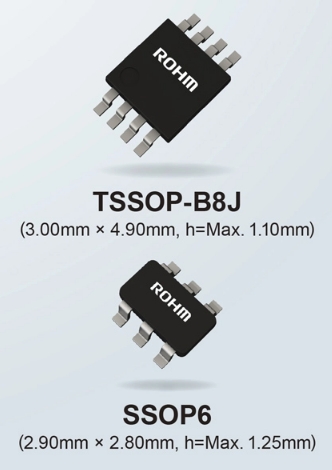
  ROHM has developed a new lineup of high accuracy current sense amps – the BD1423xFVJ-C and the BD1422xG-C. They are qualified under the AEC-Q100 automotive reliability standard. The BD1423xFVJ-C series, offered in the TSSOP-B8J package, supports input voltages up to +80V, making it ideal for high-voltage environments such as 48V DC-DC converters, redundant power supplies, auxiliary batteries, and electric compressors. The series includes three models with different gain settings: BD14230FVJ-C, BD14231FVJ-C and BD14232FVJ-C.  For lower voltage use cases, the BD1422xG-C, available in the compact SSOP6 package, supports input voltages up to +40V. This makes them suitable for automotive applications requiring space-saving designs, such as current monitoring and protection (overcurrent) in 5V/12V power supply networks used in body and drivetrain domains. Like its high-voltage counterpart, this series also consists of three different gain options: BD14220G-C, BD14221G-C and BD14222G-C.  In recent years, alongside conventional 5V/12V power supplies, the automotive market has seen a growing adoption of 48V systems fueled by the rising popularity of electric vehicles. Furthermore, as vehicle functionality becomes more advanced, the need for precise monitoring and control across a wide range of applications continues to increase, placing a greater importance on high-accuracy current sensing.  A current sense amp indirectly measures the current flowing through a circuit by amplifying the miniscule voltage drop across a shunt resistor. The amplified signal is then sent to an ADC or comparator for system control and monitoring. ROHM’s automotive-grade current sense amps meet market demands by leveraging proven analog expertise. This enables high-accuracy current sensing with compatibility for both negative and high voltage environments, contributing to improved safety and reliability in automotive applications, particularly electric vehicles.  These new products achieve greater space efficiency by integrating most of current sensing circuitry, typically comprised of an operational amplifier and discrete components, int o a single package. As a result, current detection is possible by simply connecting a shunt resistor. The devices also feature a two-stage amplifier configuration, consisting of a chopper amplifier at the input and an auto-zero amplifier at the output. Internal resistor matching for gain setting ensures stable, accurate current sensing (±1%) while minimizing the effects of temperature variations.  Furthermore, current detection accuracy is maintained even when an external RC filter circuit added for noise suppression, significantly reducing design complexity and development time. Additional features include -14V negative voltage tolerance that supports back electromotive force, reverse connection, and negative voltage input.  Going forward, ROHM will continue to deliver optimal solutions that contribute to higher precision and enhanced reliability in automotive equipment.  Application Examples  • BD1423xFVJ-C (for 48V systems): Redundant power supplies, auxiliary batteries, DC-DC converters, and electric compressors, and the like  • BD1422xG-C (for 5V/12V systems): Body DCUs (Domain Control Units) / ECUs (Electronic Control Units), etc.  Terminology  AEC-Q100 Automotive Reliability Standard  AEC stands for Automotive Electronics Council, a reliability standard for automotive electronic components established by major automotive manufacturers and US electronic component makers. Q100 is a standard that specifically applies to integrated circuits (ICs).  Shunt Resistor  A resistor connected in series in the current path to detect the current in the circuit by measuring the potential difference across it.  Chopper Amp  An amp circuit designed to minimize signal offset and noise, primarily used for accurately amplifying low-frequency and weak DC signals.  Auto-Zero Amp  An amp that automatically compensates for offset voltage (unwanted noise and errors) by continuously sampling and correcting it during operation. This ensures high signal accuracy, making it ideal for applications that demand ultra-precise measurement and signal processing.
Key word:
Release time:2025-06-13 16:56 reading:949 Continue reading>>
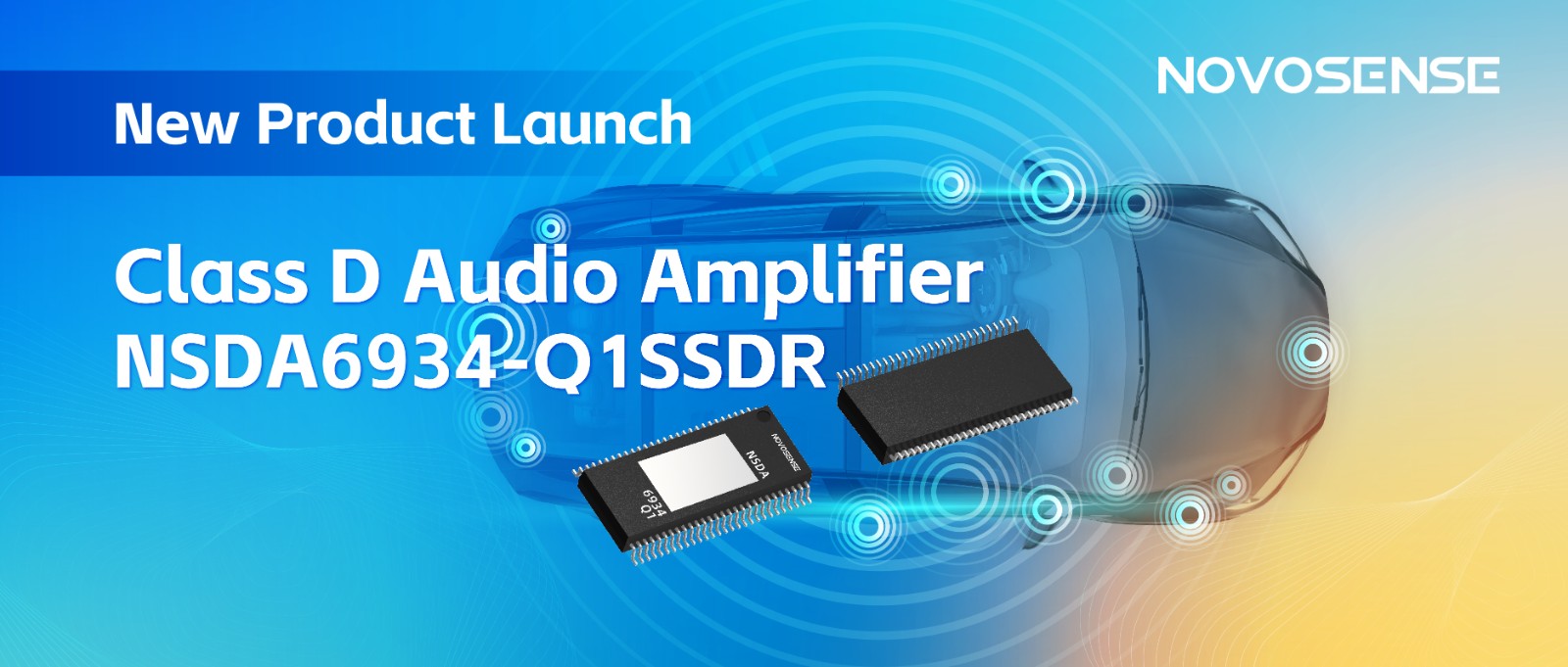
NOVOSENSE introduces NSDA6934-Q1: Automotive-grade Class D audio amplifier with digital input
  NOVOSENSE recently announced the launch of the NSDA6934-Q1, a digital-input automotive-grade Class D audio amplifier designed for vehicle audio systems. Featuring four-channel audio output with up to 75W per channel, it supports low-latency mode and sampling rates up to 192kHz. The amplifier offers flexible switching frequencies, multiple modulation options, and comprehensive protection features, making it highly adaptable to various automotive audio system designs.  Class D amplifiers: Driving the evolution of automotive audio  As automotive electronics continue to advance, Class D amplifiers have emerged as the preferred choice for vehicle audio systems due to their high efficiency, low heat dissipation, and compact form factor. These amplifiers not only meet modern vehicles’ stringent energy efficiency demands but also enhance audio quality and power output within limited space, playing a key role in the evolution of automotive audio technology.  Optimized Low-Latency Mode: Reducing Path Delay by Over 70%  In automotive audio systems, amplifiers boost signals from the DSP (Digital Signal Processor) before transmitting them to the speakers. Traditional amplifiers can contribute to over 30% of total signal transmission latency, impacting system performance.  The NSDA6934-Q1 features a unique low-latency mode that reduces transmission path delay by more than 70%, granting the DSP additional time for signal processing. This reduces DSP resource demands and enhances the effectiveness of RNC (Road Noise Cancellation). Additionally, the amplifier supports up to 192kHz sampling rates, delivering high-resolution audio with enhanced clarity and detail for an immersive in-car listening experience.  Flexible Configurations to Suit Various Designs  The NSDA6934-Q1 provides a wide range of switching frequencies and modulation options, allowing system engineers to optimize efficiency and size.  Adjustable Switching Frequency (384kHz – 2.1MHz)  At 384kHz, the amplifier achieves up to 93% efficiency, ideal for applications prioritizing power savings, though it requires a 10μH inductor for operation.  At 2.1MHz, the amplifier supports a compact 3.3μH inductor, making it suitable for space-constrained smart cockpit integration.  Selectable Modulation Modes (BD Mode & 1SPW Mode)  BD Mode (50% duty cycle) ensures superior linearity at high power levels, making it ideal for high-output applications.  1SPW Mode (20% duty cycle) reduces conduction losses, improving efficiency in low-power scenarios  Additionally, the NSDA6934-Q1 supports TDM16 data format, ensuring seamless integration with mainstream audio interfaces. With eight selectable I2C addresses, it prevents communication conflicts among peripheral devices. It also features integrated PVDD voltage monitoring, eliminating the need for external resistor dividers and simplifying system wiring and debugging.  Enhanced EMC Performance & Comprehensive Protection  The NSDA6934-Q1 incorporates multiple EMC optimization techniques, including slew rate control, phase control, and three spread-spectrum modes (triangular wave, random spread, hybrid spread), helping customers pass system-level EMC tests efficiently.For system reliability, the amplifier integrates multiple intelligent protection and diagnostic functions, including:  • I2C watchdog for real-time bus monitoring.  • Thermal protection, which automatically reduces gain under high-temperature conditions.  • AC/DC diagnostics for real-time power supply monitoring.  • Comprehensive protection suite, including temperature alarms, over-temperature shutdown, undervoltage, overvoltage, and overcurrent protection, ensuring robust system stability.
Key word:
Release time:2025-04-24 17:19 reading:2114 Continue reading>>

Turn to

/ 4

  • Week of hot material
  • Material in short supply seckilling
model brand Quote
BD71847AMWV-E2 ROHM Semiconductor
MC33074DR2G onsemi
CDZVT2R20B ROHM Semiconductor
TL431ACLPR Texas Instruments
RB751G-40T2R ROHM Semiconductor
model brand To snap up
BU33JA2MNVX-CTL ROHM Semiconductor
BP3621 ROHM Semiconductor
IPZ40N04S5L4R8ATMA1 Infineon Technologies
TPS63050YFFR Texas Instruments
STM32F429IGT6 STMicroelectronics
ESR03EZPJ151 ROHM Semiconductor
Hot labels
ROHM
IC
Averlogic
Intel
Samsung
IoT
AI
Sensor
Chip

About us

Qr code of ameya360 official account

Identify TWO-DIMENSIONAL code, you can pay attention to

AMEYA360 mall (www.ameya360.com) was launched in 2011. Now there are more than 3,500 high-quality suppliers, including 6 million product model data, and more than 1 million component stocks for purchase. Products cover MCU+ memory + power chip +IGBT+MOS tube + op amp + RF Bluetooth + sensor + resistor capacitance inductor + connector and other fields. main business of platform covers spot sales of electronic components, BOM distribution and product supporting materials, providing one-stop purchasing and sales services for our customers.

Please enter the verification code in the image below:

verification code